
custom metal casting molds
Designing custom metal casting molds for production is a critical process that bridges the gap between a conceptual part and a tangible, high-quality component. This intricate art and science demand a deep understanding of material properties, manufacturing processes, and the specific requirements of the final product. The initial stages involve a thorough analysis of the part’s geometry, desired surface finish, dimensional tolerances, and the chosen metal alloy. Engineers and designers collaborate to translate these specifications into a mold design that not only facilitates accurate replication but also optimizes the casting process for efficiency and defect reduction. Considerations like draft angles, core placement, and parting lines are paramount to ensure smooth ejection of the cast part and minimize post-processing.
The selection of mold material is another crucial aspect when creating custom metal casting molds. Depending on the production volume, the melting point of the metal, and the desired mold life, materials like sand, plaster, ceramic, or various metal alloys for permanent molds are chosen. Sand molds, often used for their cost-effectiveness and versatility, require careful consideration of sand type, binder, and compaction methods to achieve the necessary strength and permeability. For more intricate designs or higher volume production, investment casting (lost wax) utilizes ceramic slurries to create highly detailed molds, while permanent molds, typically made from cast iron or steel, are favored for their durability and repeatable accuracy over many cycles. Each choice influences the complexity and cost of designing custom metal casting molds.
Gating and risering systems are fundamental elements in the design of custom metal casting molds, directly impacting the quality of the final product. The gating system, comprising the sprue, runner, and gates, is designed to deliver molten metal into the mold cavity efficiently and without turbulence, preventing defects like cold shuts or porosity. Risers, on the other hand, are reservoirs of molten metal that compensate for solidification shrinkage, ensuring a fully dense and sound casting. Proper sizing and placement of both gates and risers are determined through sophisticated simulation software and practical experience, aiming to achieve directional solidification where the casting solidifies progressively from the thinnest sections towards the risers.
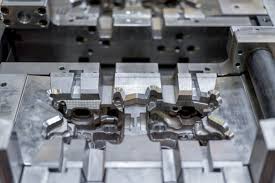
How to design custom metal casting molds for production?
For high-volume production of intricate parts, especially those requiring excellent surface finish and tight tolerances, die casting often becomes the preferred method. When embarking on such projects, it’s essential to partner with experienced aluminum die casting suppliers. These specialists possess the expertise not only in manufacturing the molds themselves but also in understanding the nuances of aluminum alloys and the high-pressure injection process. Their knowledge significantly influences the longevity and performance of the custom metal casting molds, ensuring consistent quality throughout large production runs.
Ventilation and cooling systems are integral to the successful operation and longevity of custom metal casting molds, particularly in high-temperature applications or when dealing with metals that have specific cooling requirements. Vents allow gases and air to escape from the mold cavity during pouring, preventing trapped gas defects. Cooling channels, especially in permanent molds, are strategically placed to control the solidification rate, minimize warping, and reduce cycle times. Effective thermal management in mold design directly contributes to dimensional stability, reduced internal stresses, and improved mechanical properties of the cast component.
Finally, the iterative process of prototyping and testing is indispensable in refining the design of custom metal casting molds for production. Initial mold designs are often validated through simulations, followed by the creation of prototype molds for small-batch runs. These trials provide invaluable data on metal flow, solidification patterns, and potential defect formation. Adjustments are then made to the mold design based on these findings, ensuring that the final production molds are optimized for efficiency, quality, and cost-effectiveness. This methodical approach minimizes risks and guarantees that the investment in custom metal casting molds yields the desired results for large-scale manufacturing.

Leave a Reply