
Chinese folding house
Is a Chinese folding house suitable for off-grid living? This is a question that has gained traction among those seeking flexible, mobile, and sustainable housing solutions. Chinese folding houses are engineered to be portable, modular, and energy-efficient, making them a potential option for off-grid lifestyles. Unlike traditional homes, these structures are designed for easy assembly and disassembly, which allows them to be relocated to remote locations without extensive groundwork or infrastructure. This unique adaptability makes them a compelling choice for people looking to live independently from public utilities.
The suitability of a chinese folding house for off-grid living depends largely on its design and construction. These houses are typically built using lightweight, durable materials such as steel frames and insulated panels, which help maintain structural integrity while keeping transportation and setup simple. The foldable nature of the house allows for rapid deployment, meaning it can be transported to areas with limited access and set up in a matter of hours. This mobility is particularly valuable for off-grid living, where traditional construction may be impractical due to terrain or lack of infrastructure.
Energy efficiency is a major factor when considering whether a Chinese folding house is suitable for off-grid living. Many models are designed with insulation that regulates indoor temperatures, reducing reliance on heating or cooling systems. Some versions come equipped with solar panel integration, which can provide electricity in remote areas. By pairing a Chinese folding house with renewable energy sources, residents can create a self-sufficient living environment that does not rely on grid connections. Additionally, energy-efficient appliances and LED lighting can further enhance sustainability and reduce the overall energy footprint.
Water management is another crucial aspect of off-grid living, and Chinese folding houses can be customized to accommodate it. Rainwater harvesting systems, compact water storage, and filtration setups can be incorporated into the design. This allows residents to maintain access to clean water without depending on municipal supply. Combined with proper waste management solutions, a Chinese folding house can offer a complete off-grid setup that supports independent, environmentally responsible living. These capabilities make it more than just a temporary shelter—it can be a permanent, self-contained home in remote areas.
Space efficiency is an advantage that supports off-grid suitability. Chinese folding houses are typically compact yet highly functional, utilizing every inch of interior space intelligently. Built-in storage, foldable furniture, and multi-purpose layouts help maximize usability without increasing the footprint of the house. This is particularly beneficial for off-grid settings, where smaller, lighter structures are easier to transport and install. The modular design also allows for expansion; additional units can be added as needed, offering flexibility for growing families or additional living requirements.
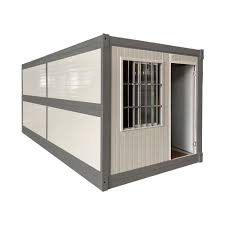
Is a Chinese folding house suitable for off-grid living?
Durability is a key consideration for anyone contemplating off-grid living, and Chinese folding houses are built with longevity in mind. Steel frames, corrosion-resistant coatings, and reinforced joints ensure that the structure can withstand harsh weather conditions, from heavy rain to strong winds. This resilience makes them suitable for remote environments where traditional homes might struggle without continuous maintenance. The combination of foldable convenience and sturdy construction means a Chinese folding house can remain reliable for years, even in challenging locations.
Customization options also enhance the appeal of a Chinese folding house for off-grid living. Manufacturers offer variations in layout, insulation, and energy systems, allowing homeowners to tailor the house to their specific needs. Whether it is adding solar panels, a rainwater collection system, or optimizing ventilation for a particular climate, these homes can be adapted to suit almost any remote location. This flexibility ensures that off-grid living does not require sacrificing comfort or functionality.
Cost-effectiveness is another advantage. Setting up traditional off-grid housing can be expensive and labor-intensive. Chinese folding houses, by contrast, offer a ready-made, transportable solution that reduces both construction time and cost. With fewer resources required for foundation work, electricity connections, and water supply lines, a Chinese folding house allows off-grid residents to achieve independence without the financial burden typically associated with building a remote home. This combination of affordability, mobility, and durability makes them an increasingly popular choice for off-grid enthusiasts.
In conclusion, the question “Is a Chinese folding house suitable for off-grid living?” can be answered affirmatively for those who prioritize mobility, efficiency, and sustainability. These houses are designed to be portable, durable, and energy-conscious, making them well-suited for remote or off-grid environments. With options for solar energy, water management, compact layouts, and custom features, a Chinese folding house can provide a comfortable, self-sufficient living solution. For anyone seeking independence from conventional utilities without compromising on practicality or safety, investing in a Chinese folding house is a smart, modern approach to off-grid living.

Leave a Reply